Inspections By:Boogie
Solar Array Thermal Scan By:Boogie
Thermal sweep finds dead cells, hot spots, and diode failures across entire arrays.
Contact to discuss Full-array thermal sweep · panel-level findings · report in 48 hours · scoped per project
Flown under FAA Part 107 — certificated remote pilot · airspace authorization handled · insured commercial operations
What that means for your job →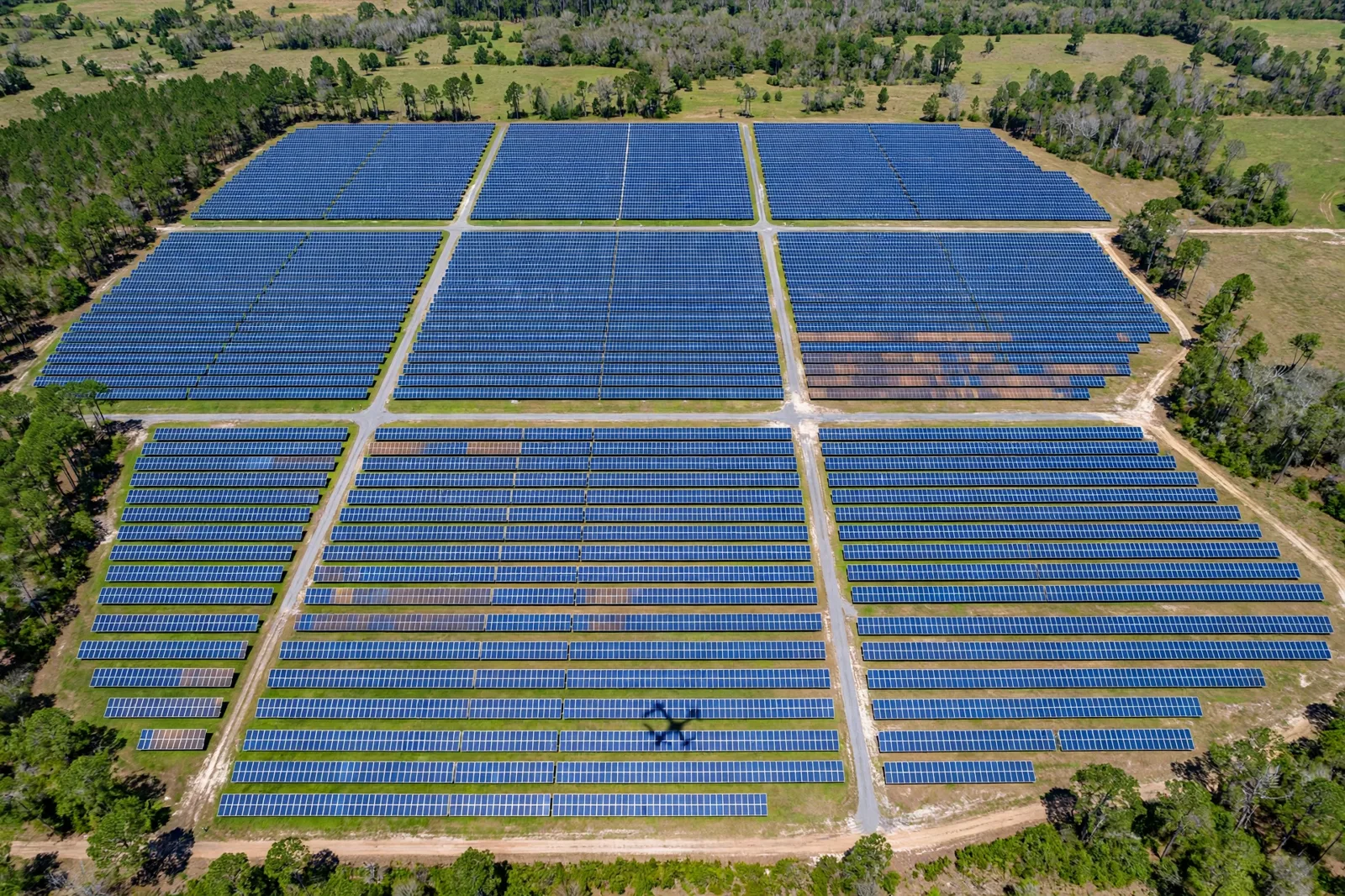
The job
Underperforming panels run hot — and a radiometric sweep of the whole array finds them in one pass: dead cells, hot spots, diode failures, and strings that quietly stopped earning. You get a panel-level map of what to fix, in the order it costs you money.
This inspection is priced per project, not off a rate card — tell us about the site through the contact page or the Client Portal intake, and we'll scope the job and confirm the price together before anything is booked.
What's included
- Radiometric thermal sweep of the entire array
- Panel-level findings — dead cells, hot spots, and diode failures located
- Annotated health report your electrician can work from
- Visible-light companion imagery of flagged panels
- Digital delivery within 48 hours
Straight Answers
Before you ask
What faults show up on thermal?
Failures that change a panel's temperature: dead cells and strings, hot spots, bypass-diode failures, and delamination patterns. The report locates each one so your electrician verifies and repairs instead of hunting.
When does the scan have to fly?
Under load and in good sun — the array has to be working for faults to show their heat. We schedule around weather and production conditions, and reschedule at no penalty if the day won't produce valid data.
Can you scan a large array?
Yes — aerial capture covers ground-mount and rooftop arrays far faster than a handheld pass, in a single mobilization for most sites. Tell us the array size and location for a coverage confirmation.
Does the scan interrupt production?
No shutdowns and no contact with the array. The inspection happens from the air while the system keeps generating.
Field Note
The Panels That Look Fine and Still Lose Money
A solar array can look perfect from the ground and still be quietly underproducing. Here is what a radiometric thermal sweep sees that your eyes — and usually your inverter readout — cannot.