Field Notes
What a Thermal Roof Scan Actually Shows
A roof can pass a walk-through and still be soaked. Here is what a radiometric scan sees, what it cannot prove, and how the report turns into a repair bid instead of a guess.
All day, a roof soaks up the sun. After sunset, dry insulation and wet insulation give that heat back at different rates — and a radiometric thermal sensor reads the difference. Our platform carries a 640×512 radiometric sensor: every pixel is a temperature measurement, not a colorized guess. The flight happens at dusk, when the contrast is strongest.
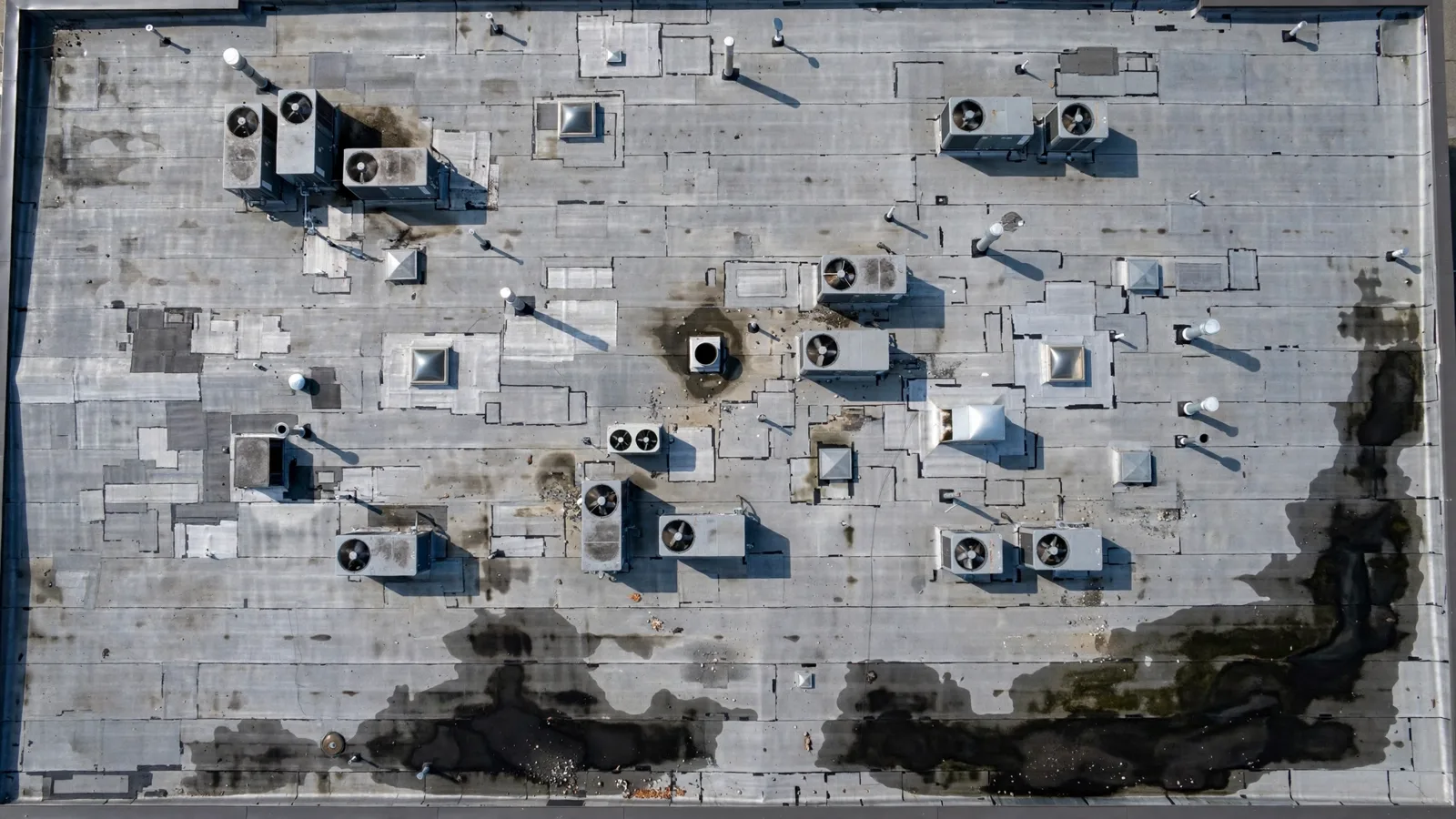
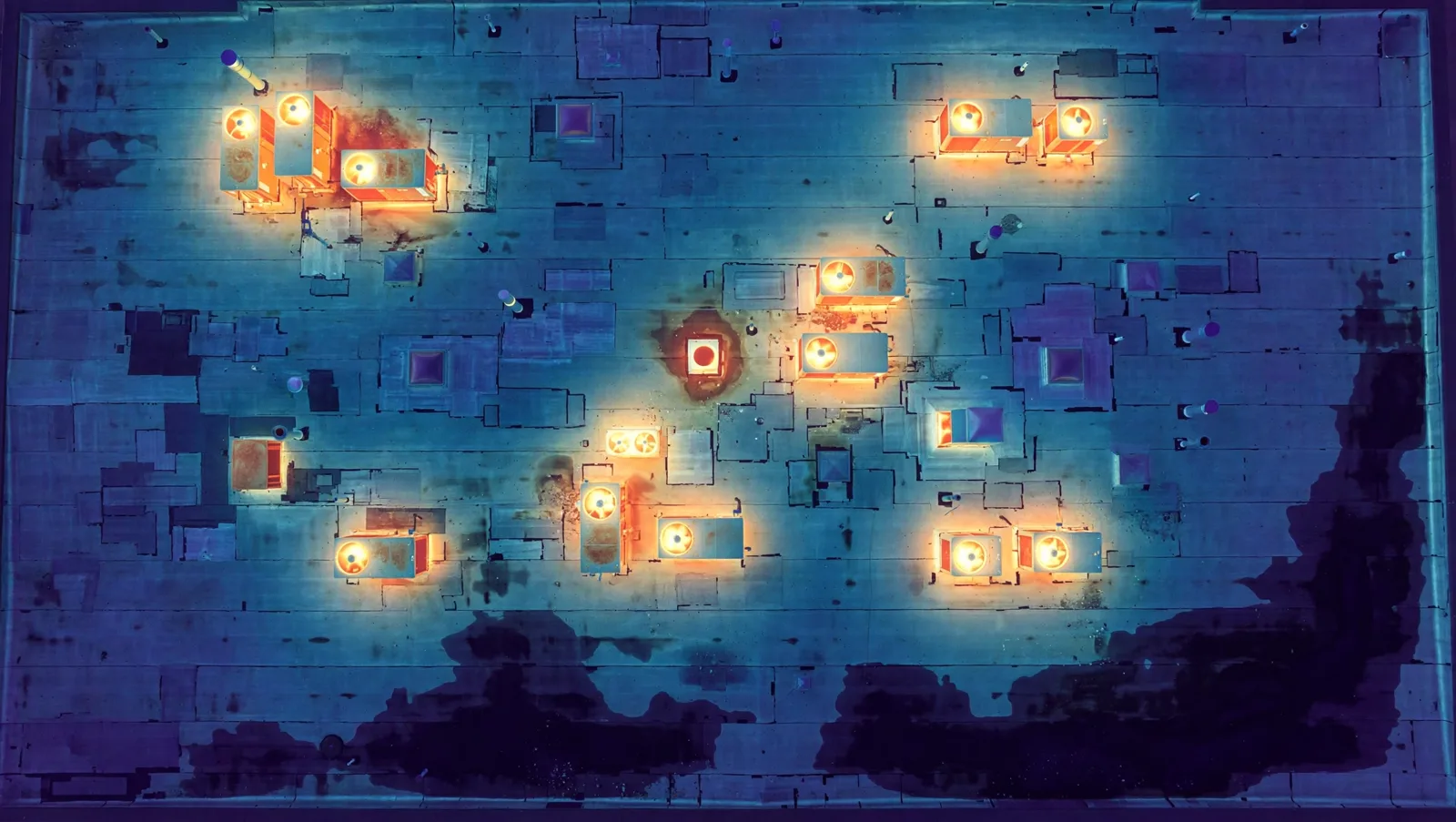
Sample imagery — the same roof in visible light and through a radiometric thermal sensor. Rooftop units glow hot, and the ponding areas carry a thermal signature all their own. Anomalies like those are what a scan marks and locates for your roofer.
What shows up
The signatures a scan marks and locates: trapped moisture and wet insulation under the membrane, failing or open seams, ponding areas that never fully dry, and penetrations — curbs, vents, HVAC mounts — whose seals are letting the roof system down. On the report, each suspect area is annotated on the roof imagery, so your roofer walks up knowing where to look.
What it cannot do
A scan does not prove a leak, and it does not replace a core sample. What it replaces is the guesswork: instead of tearing into a roof on a hunch — or paying to re-roof sections that are still dry — the crew cores exactly where the evidence points and confirms moisture with their own hands. Evidence first, demolition second.
When it flies, and what you get
The roof needs to be dry on the surface and loaded with a day of sun; if weather will not produce valid data, we reschedule at no penalty rather than sell you a pretty picture. The deliverable is the Annotated Thermal Anomaly Report, in your hands within 48 hours — thermal and visible imagery of the whole roof, every suspect marked and located.