Inspections By:Boogie
Thermal Roof Inspection By:Boogie
Radiometric thermal scan maps trapped moisture and failing insulation before it becomes a leak.
Starting at $750 starting rate · Single-roof mobilization · dusk flight · report in 48 hours
Flown under FAA Part 107 — certificated remote pilot · airspace authorization handled · insured commercial operations
What that means for your job →The job
No climbers on the roof. No shutdowns inside. A radiometric thermal flight at dusk — when the day's heat makes trapped moisture and failing insulation stand out — produces a marked-up map of every suspect area on the roof, delivered as an annotated report in 48 hours. You bid the repair with evidence instead of guesses.
Booking is inquiry-based — reserve the date through the Client Portal and we'll confirm scope before anything is final. The rate shown is a starting point for a standard job; the confirmed price is set in the contract before we fly.
What's included
- Radiometric thermal flight (640×512) flown at dusk for maximum thermal contrast
- Full-roof thermal and visible-light imagery
- Annotated anomaly report — moisture and insulation suspects marked and located
- Airspace authorization handled for the site (LAANC / FAA where required)
- Digital delivery of the report and imagery within 48 hours
See It
What the eye sees vs. what thermal reveals
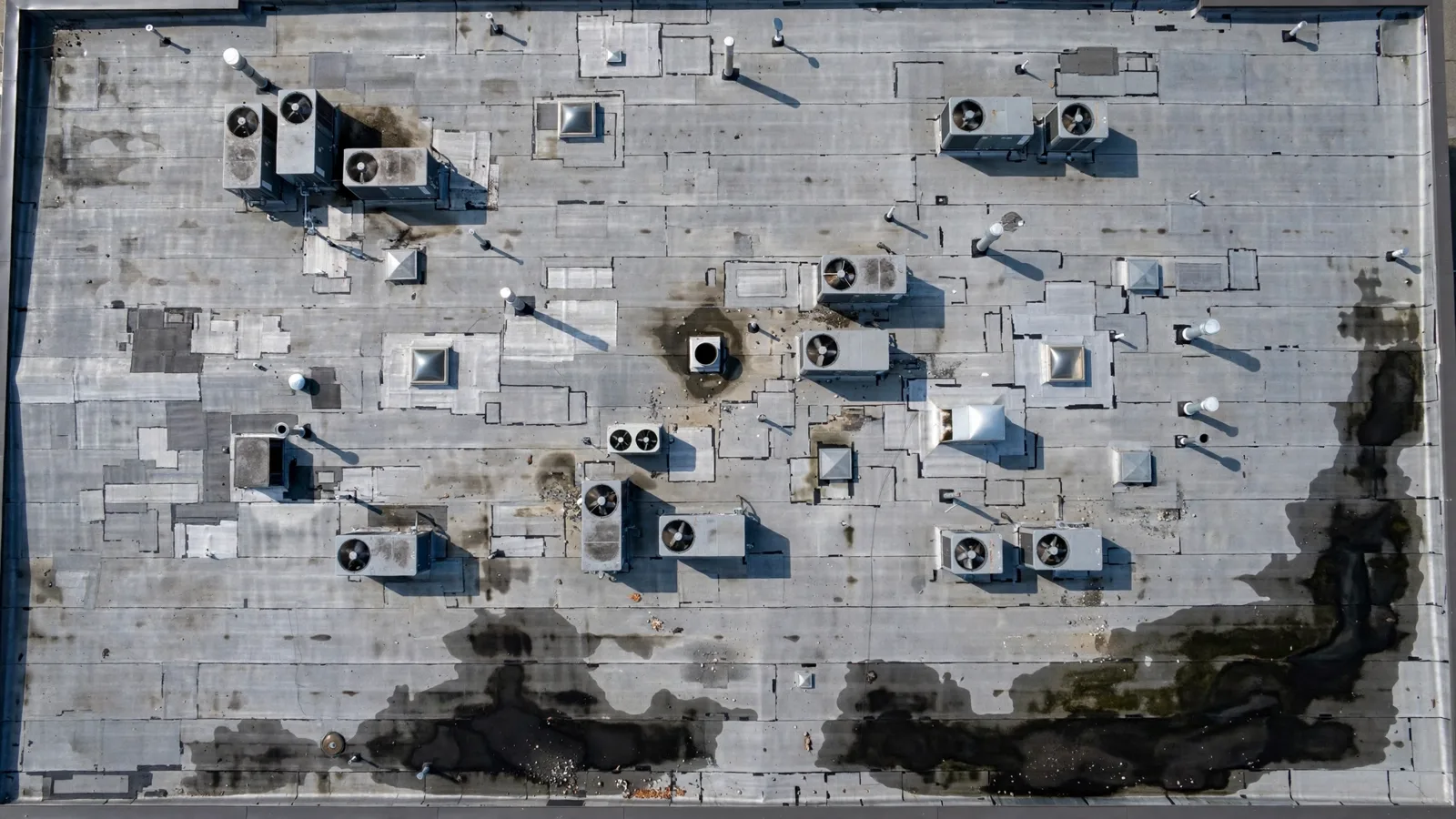
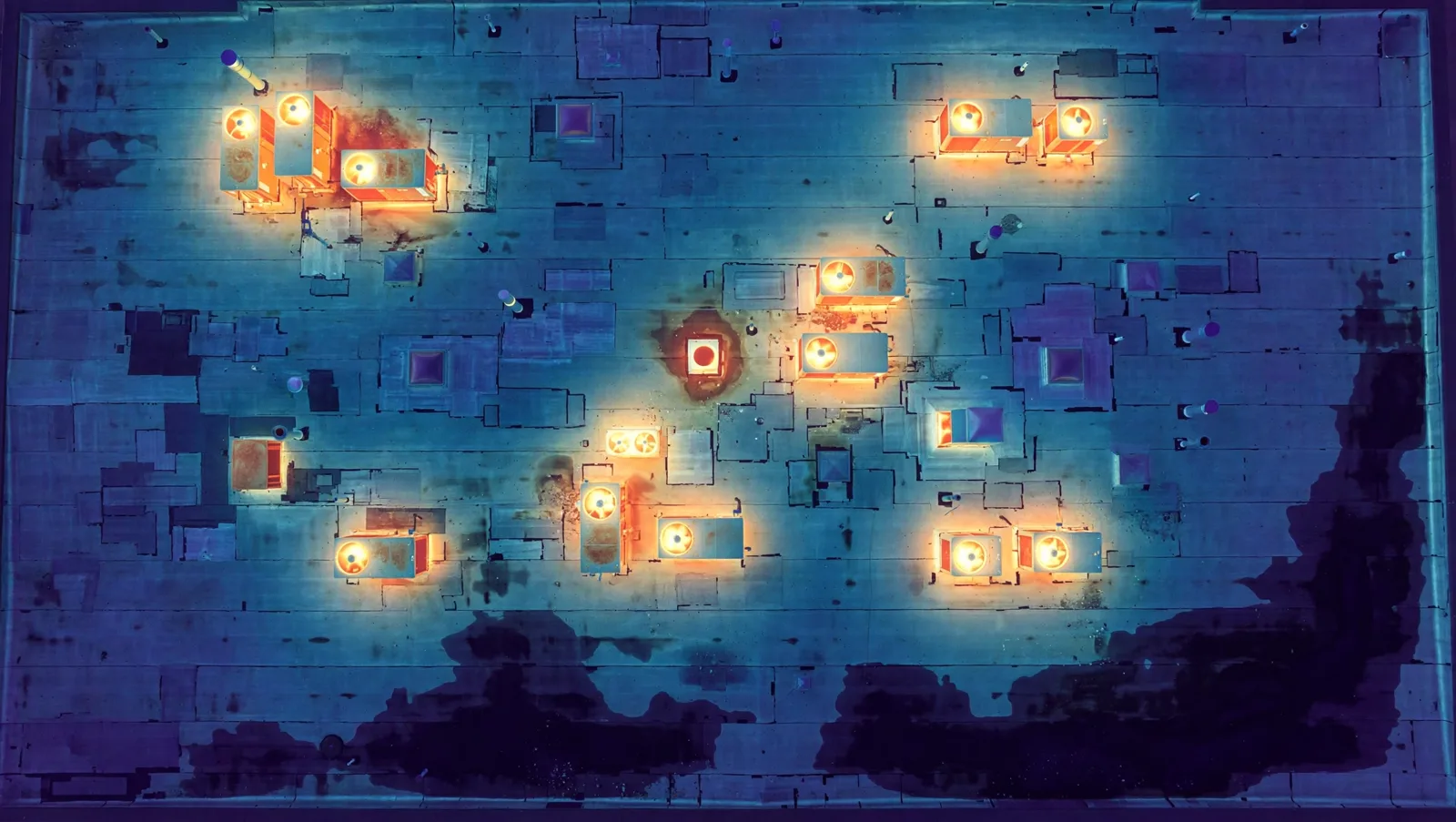
Sample imagery — the same roof in visible light and through a radiometric thermal sensor. Rooftop units glow hot, and the ponding areas carry a thermal signature all their own. Anomalies like those are what a scan marks and locates for your roofer.
Straight Answers
Before you ask
What can a thermal scan actually find?
Temperature patterns on the roof surface that point to trapped moisture, wet or failing insulation, and seam problems. Wet material holds heat differently than dry material — after a day of sun, those differences show up clearly on a radiometric sensor at dusk.
Can it prove my roof is leaking?
It identifies and locates the suspect areas with evidence you can act on. Final confirmation of moisture still belongs to a core sample or your roofer's hands — the scan tells them exactly where to look instead of tearing up the whole roof.
How accurate is the temperature data?
The Autel EVO Max 4T V2 carries a 640×512 radiometric sensor — every pixel is a temperature measurement, not a colorized guess. Anomalies are flagged by measured temperature difference and marked on the report.
What if weather or airspace gets in the way?
Thermal needs the right conditions: a dry roof and a day of solar loading. If wind, rain, or airspace restrictions block the flight window, we reschedule at no penalty and hold your slot. Site airspace authorization is handled before we ever launch.
Field Note
What a Thermal Roof Scan Actually Shows
A roof can pass a walk-through and still be soaked. Here is what a radiometric scan sees, what it cannot prove, and how the report turns into a repair bid instead of a guess.